Why they matter for your bill
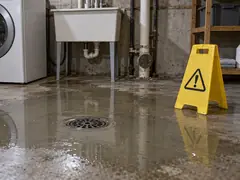
Category decides what gets torn out. Clean water caught early can often be dried in place. Gray water means wet carpet pad and the bottom of the drywall come out. Category 3 water, the IICRC says, is grossly contaminated and can carry harmful agents. Porous materials it soaks are usually removed: our calculator cuts drywall 4 ft up for it, against 2 ft for gray water.
Category can change. The IICRC says time and temperature affect it, and that it depends on where the water came from and what it touched. Our calculator treats clean water that has sat more than 48 hours as gray. The IICRC also said in 2026 that wind-driven rain and water coming in from above aren’t automatically Category 3; the restorer decides from what they find.
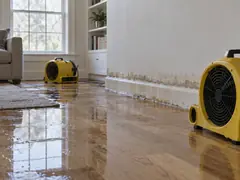
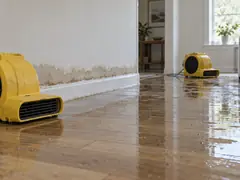
Class decides how much drying equipment you pay for. The more water has soaked into materials, the more air movers, dehumidifiers and days it takes. Class 4 means water held deep in dense materials like hardwood, plaster or concrete, which needs specialty drying. Our calculator sizes equipment by the wet area rather than asking about class.
What each category does to one room
The same 200 sq ft room with carpet and drywall, priced by our calculator at national prices, from drying through repairs.
| Category | Drying | Drywall cut | One room |
|---|---|---|---|
| Category 1 · clean water, caught earlyA broken supply line, a water heater, a clean sink overflow | 3–4 days | None | $1,150–$2,750 |
| Category 1 · clean water left 48+ hoursTreated as gray water once it has sat | 4–5 days | 2 ft | $3,950–$8,300 |
| Category 2 · gray waterA washing machine or dishwasher overflow, a sump pump failure, a toilet overflow with urine only | 3–4 days | 2 ft | $3,650–$7,850 |
| Category 3 · black waterSewage, sewer backflow, rising floodwater from rivers or the sea | 4–5 days | 4 ft | $4,700–$10,050 |
The four drying classes
Restorers rate how much water has to be dried out. Higher classes need more equipment, more days or specialty methods. Descriptions from a university protocol based on the S500.
- 1
Class 1
The least water absorbed, mostly in materials that don’t soak it up. Much of it will evaporate on its own.
- 2
Class 2
A significant amount of water absorbed, with a large evaporation load: wet carpet, pad or drywall.
- 3
Class 3
The most water absorbed and the largest evaporation load.
- 4
Class 4
Water bound deep in dense materials like hardwood, plaster, concrete, stone or brick. It evaporates slowly and needs specialty drying.
Other words on your estimate
Sources
Costs come from our calculator: drying prices from 10 published price sheets, repair prices built from published labor hours, federal wage data and store prices. The S500 itself is a paid standard; we describe it in our own words. Read the full methodology.
- Category of Water Damage and Weather-related Events (S500 position statement), IICRC.
- IICRC position statement on weather-related water damage (press release), IICRC.
- ANSI/IICRC S500 Standard for Professional Water Damage Restoration, IICRC.
- Quick reference: water damage response in buildings, Massachusetts Department of Public Health.
- Water intrusion protocol, Bowling Green State University, Risk Management.
- A Brief Guide to Mold, Moisture and Your Home, U.S. EPA.
- Published restoration price sheets (state and county contracts, contractor price lists), RestoreCost.