
Water Damage and Insurance Glossary
The words on a restoration estimate and an insurance claim, from air mover to Xactimate, in plain English. Each definition names its source, and the longer guides go further.
Explained in full
 What is Xactimate?
The software behind most insurance repair estimates, and how to check one.
What is Xactimate?
The software behind most insurance repair estimates, and how to check one.
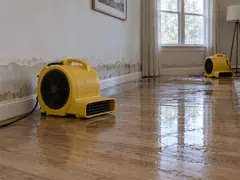 Water damage categories and classes
How dirty the water is, how much there is to dry, and what each does to the price.
Water damage categories and classes
How dirty the water is, how much there is to dry, and what each does to the price.
 Water damage restoration price list
What each line on a drying and repair estimate usually costs.
Water damage restoration price list
What each line on a drying and repair estimate usually costs.
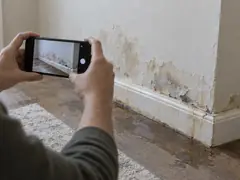 Does homeowners insurance cover water damage?
What decides it, and how a claim pays out.
Does homeowners insurance cover water damage?
What decides it, and how a claim pays out.
Terms, A to Z
A
- Actual cash value (ACV)Insurance
-
What damaged property was worth when it was damaged: the cost to repair or replace it, minus depreciation for age and wear. A replacement-cost policy may pay this first and the rest once the repairs are done.
- Additional living expenses (ALE)Insurance
-
The extra cost of living somewhere else, such as a hotel or higher food bills, while a covered loss leaves your home unfit to live in. The standard homeowners form calls it loss of use (Coverage D). It pays the increase over your normal costs, not your usual bills.
- AdjusterInsurance
-
The person who inspects the damage and estimates the claim payment for the insurance company. A staff adjuster is the insurer’s employee; an independent adjuster is hired by the insurer on contract. Either way, they work for the insurer.
- Air moverEstimate
-
A high-velocity fan aimed across wet floors and walls to speed drying. It’s billed per machine per day, at $26–$36 a day nationally, so the count and the days are worth checking against the drying log.
- Air scrubberEstimate
-
A portable machine that pulls room air through a HEPA filter to catch dust and mold spores. Vented outdoors, the same kind of unit keeps a sealed-off work area under negative pressure, so dirty air doesn’t leak into the rest of the house.
- AntimicrobialEstimate
-
A product applied to wet or contaminated materials to kill or slow the growth of bacteria and mold. The EPA registers antimicrobial products as pesticides. For mold cleanup, EPA’s guide says biocides aren’t a routine step, though professional judgment may call for them.
- AppraisalInsurance
-
A way to settle a disagreement over the amount of a loss, not whether it’s covered. You and the insurer each hire an appraiser, the two pick an umpire, and any two of the three agreeing sets the amount. Each side pays its own appraiser and half the umpire.
- Assignment of benefits (AOB)Insurance
-
A contract that hands your right to collect the claim payment to a contractor, such as a water mitigation company, which then bills your insurer directly. Florida bars them on residential and commercial property policies issued or renewed on or after January 1, 2023.
C
- Category (water)Estimate
-
How contaminated the water is, from Category 1 (clean) to Category 3 (grossly contaminated, like sewage). It’s one of the biggest factors in what gets torn out: the same 200 sq ft room costs $1,150–$2,750 with clean water caught early and $4,700–$10,050 with sewage.
- Class (drying)Estimate
-
How much water soaked in and how hard it is to dry, from Class 1 (little absorbed, mostly in materials that don’t soak it up) to Class 3 (the most absorbed) and Class 4 (water bound deep in hardwood, plaster or concrete, which needs specialty drying).
D
- DeductibleInsurance
-
The part of a covered loss you pay; the insurer pays what’s above it. It’s usually a flat amount, though some policies use a percentage of the home’s insured value, often for wind or hurricane damage.
- Dehumidifier (LGR)Estimate
-
The machine that pulls moisture out of the air while things dry. Restorers use low grain refrigerant (LGR) units, which keep drying the air at humidity levels where ordinary refrigerant models stop; FEMA’s flood guidance sizes them by the volume of the wet area.
- DepreciationInsurance
-
The value an insurer takes off for age and wear. On a replacement-cost policy, the part it holds back is often recoverable: paid once you show the repairs are done. Non-recoverable depreciation, such as on items the policy pays at actual cash value, isn’t paid back.
- Drying logEstimate
-
The daily record of moisture readings, temperature, humidity and the equipment running, often with a sketch of where each reading was taken. It shows whether and when materials reached their drying goal, which is how you check the equipment days you were billed.
E
- ExtractionEstimate
-
Removing standing or soaked-in water with pumps, wet vacuums or extraction machines before drying starts. It’s usually priced per square foot, and dirtier water costs more: $0.34–$0.65 per sq ft for clean water and $0.74–$1.09 for sewage in our national rates.
F
- Flood (insurance definition)Insurance
-
Under federal flood insurance, a general and temporary condition where water covers at least two acres of normally dry land, or two or more properties (one of them yours), from overflowing rivers or tides, unusually fast runoff of surface water, or mudflow. Standard homeowners policies exclude it.
- Flood cutEstimate
-
A straight cut along a wall that removes the wet bottom of the drywall, and any wet insulation behind it, so the wall cavity can dry. Guidance says to cut above the water line; our calculator assumes 2 ft for gray water and 4 ft for sewage.
H
- HO-3 policyInsurance
-
The standard “special form” homeowners policy. It covers the house against any cause of damage not specifically excluded (flood and earthquake among them), and your belongings only against the perils it names.
M
- MitigationEstimate
-
The emergency work that stops damage getting worse: extracting water, tearing out what can’t be saved and drying the structure. Your policy expects you to take reasonable steps to protect the property; if the damage is covered, it generally pays the reasonable cost of those steps as part of the claim, so keep the receipts.
O
- Overhead and profit (O&P)Estimate
-
A general contractor’s markup for running the job (overhead) and its margin (profit). FEMA’s flood claims manual says 10% each is usual when repairs need a general contractor to coordinate several trades. Check it’s charged once.
P
- Proof of lossInsurance
-
A signed, sworn statement of how much you’re claiming, with documents to back it up. A federal flood policy requires one within 60 days of the loss unless FEMA extends the deadline; the standard homeowners form asks for one within 60 days after the insurer requests it.
- Public adjusterInsurance
-
A licensed adjuster you hire to prepare and negotiate your claim. You pay the fee, often a percentage of the payment, and your policy doesn’t cover it. Texas caps the fee at 10%; Florida sets its own caps.
R
- Replacement cost value (RCV)Insurance
-
The cost to repair or replace damaged property at today’s prices, with nothing taken off for depreciation. On an insurer’s estimate, RCV minus depreciation is the actual cash value.
S
- Scope (of loss)Insurance
-
The list of what’s damaged and what work it needs, with the measurements, before any prices. An estimate prices the scope, so two estimates can use the same prices and still differ because one scope is bigger.
- SupplementInsurance
-
A request for more money on a claim, usually because hidden damage turned up during tear-out or repairs, or an item was missed. Tell the insurer as soon as you find it. In Florida you have 18 months from the date of loss to give notice of a supplemental claim.
T
- Tear-outEstimate
-
Removing wet or contaminated materials that can’t be dried or cleaned, such as carpet pad, the bottom of the drywall and wet insulation. It’s billed separately from putting things back.
W
- Water backup coverageInsurance
-
An add-on to a homeowners policy for water or sewage that backs up through drains or overflows from a sump pump. The standard form excludes that damage, so without the add-on it usually isn’t covered, and the add-on usually doesn’t pay to fix the pipe itself.
X
- XactimateEstimate
-
Verisk’s estimating software. Insurers, adjusters and contractors use it to price repairs line by line from monthly price lists for more than 460 local markets.
Sources
Each definition is in our own words and names its main source; figures come from our calculator’s national rates, built from 10 published price sheets. Read the full methodology.
- Actual cash value vs. replacement cost value, North Carolina Department of Insurance.
- Homeowners 3 – Special Form (HO 00 03 10 00), sample policy, ISO, hosted by the Insurance Information Institute.
- Public adjusters, Illinois Department of Insurance.
- Claim Guidance: Structural Drying and Other Related Items (Bulletin W-13025a), FEMA, NFIP.
- Mold Remediation in Schools and Commercial Buildings, Chapter 3, U.S. EPA.
- Mold Remediation in Schools and Commercial Buildings, Chapter 4 (Table 1), U.S. EPA.
- What are antimicrobial pesticides?, U.S. EPA.
- What if my insurance isn’t paying enough?, Texas Department of Insurance.
- Assignment of benefits, Florida Department of Financial Services.
- Fla. Stat. 627.7152, assignment agreements, Florida Senate.
- Category of Water Damage and Weather-related Events (S500 position statement), IICRC.
- Water intrusion protocol, Bowling Green State University, Risk Management.
- Understanding your insurance deductibles, Insurance Information Institute.
- Flood (glossary), FEMA.
- Proof of loss (glossary), FEMA.
- Dry Out before Rebuilding, Texas Cooperative Extension, Texas A&M.
- Homeowner policy types, West Virginia Offices of the Insurance Commissioner.
- Residential property claims guide, California Department of Insurance.
- NFIP Claims Manual, FEMA.
- Public adjusters, Texas Department of Insurance.
- Fla. Stat. 626.854, public adjusters, Florida Senate.
- Fla. Stat. 627.70132, notice of property insurance claim, Florida Senate.
- Consumer advisory: coverage for water that backs up through sewers or drains, Maryland Insurance Administration.
- Xactimate, Verisk.
- Contractor line item worksheet (XactAnalysis SP help), Verisk.
- Emergency water and flood mitigation (USC-FPB-3441-JB), awarded bid schedule, University of South Carolina.
- Hurricane insurance guidance for Louisiana residents (Hurricane Francine), Louisiana Department of Insurance.
- Published restoration price sheets (state and county contracts, contractor price lists), RestoreCost.