Water Damage Cost Calculator
Four questions. It runs on this page and sends nothing anywhere.
On this page
What drives the cost
How fast the water is found matters more than anything the plumber does.
-
How fast it’s found
Water from a supply pipe starts clean. Our calculator treats it as gray once it has sat more than 48 hours: another day of drying, and wet carpet and drywall come out and have to be replaced. The same room goes from $1,150–$2,750 to $3,950–$8,300.
-
Where the pipe is
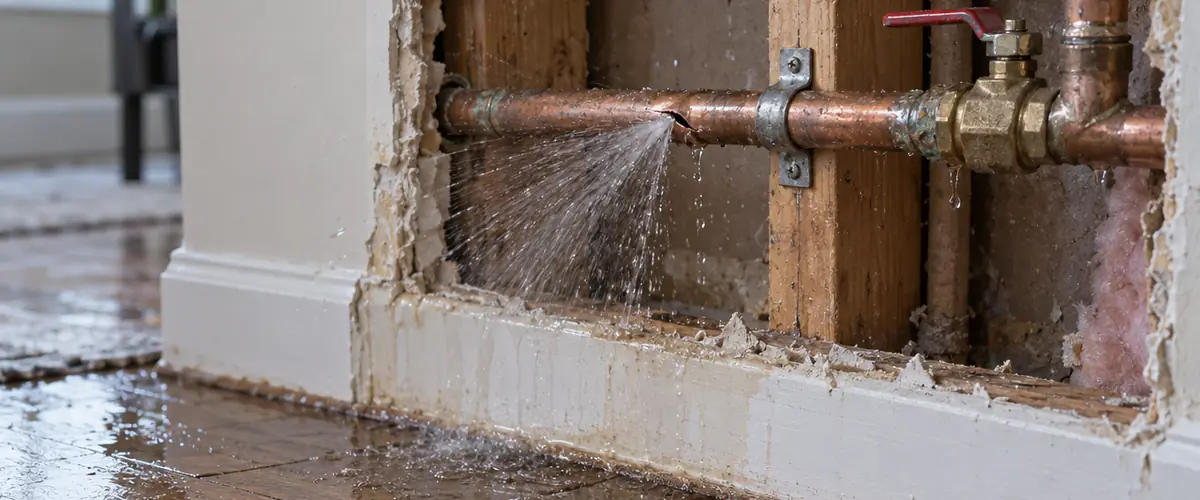
Under a sink or in an unfinished basement, the plumber can just reach it. Inside a wall or ceiling, someone has to cut it open and patch it afterward: about $350–$660 for a small opening and a repainted wall.
-
When the plumber comes
On 12 public plumbing bids and contracts, a plumber’s regular rate runs $88–$155 an hour (middle half, adjusted to national labor costs) and $120–$232 after hours. A night or weekend call can cost more than the fix.
-
How far it spread
Drying and repairs are priced mostly by the square foot, though some costs, like the service call, don’t grow with size. About two rooms (400 sq ft) found late runs $6,450–$13,700, against $3,950–$8,300 for one.
Clean water doesn’t stay clean
- Category 1 Clean water Burst supply line, clean sink overflow $$$Lowest cost
- Category 2 Gray water Washing machine, dishwasher, aquarium $$$Higher cost
- Category 3 Black water Sewage, sewer backflow, floodwater from outside $$$Highest cost
Cost by case
Each range is the calculator’s answer for a typical case at national prices, except the plumber and the patch, which are separate bills.
-
The plumber’s fixCutting out the split and joining in new pipe $90–$650
-
Patching an opened wallAbout 8 sq ft of drywall, and the wall repainted $350–$660
-
Under a sink, caught the same day100 sq ft, hard floor and drywall, dried in place $950–$2,300
-
One room, caught the same day200 sq ft, carpet and drywall, dried in place $1,150–$2,750
-
One room, found days laterTreated as gray water: carpet and drywall come out $3,950–$8,300
-
About two rooms, found days later400 sq ft, carpet and drywall come out $6,450–$13,700
-
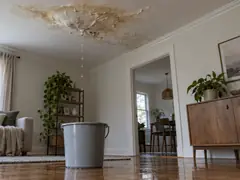 Leaked into the ceiling below100 sq ft of ceiling, caught the same day, dried and repainted
$1,100–$2,700
Leaked into the ceiling below100 sq ft of ceiling, caught the same day, dried and repainted
$1,100–$2,700
Got a quote? Check it line by line
A burst pipe usually brings two bills: the plumber’s and the water damage company’s. Check them separately. Upload the water damage quote and we’ll check it line by line.
Water Damage Quote Checker
Upload a PDF or photos. Free, no sign-up.
No quote yet?
By uploading, you agree to our terms and confirm you have the right to share the quote. How we handle uploads
- Every line compared with price sheets near the job
- The questions to ask before you sign
- We never keep the file
Turn on JavaScript to upload a quote.
Reading your quote
- Reading every line
- Sorting drying, equipment and tear-out
- Getting it ready for you to check
We read 0 lines
Check them against your quote and fix anything we got wrong. Nothing is compared until you say it looks right.
When you check it, we keep these lines and the first three digits of the ZIP code to improve our ranges, never the file. Remove any names or addresses first. How we handle uploads
Ask before you sign
We compare drying prices with published price sheets and repair prices with typical local rates, adjusted for labor costs near the job. A line can be high for a good reason, like water hidden in a wall, so ask before you assume.
A fair quote shows
- The plumber’s repair billed separately from drying
- Clean water named as Category 1, if it was caught early
- Drying equipment by the day, backed by a daily moisture log
- Any drywall cut for the plumber, by the square foot
Red flags
- Sewage-grade (Category 3) charges for a clean supply line caught early
- Carpet and drywall torn out on a same-day clean-water job, with no reason written down
- Pressure to sign before your insurer has seen the damage
Will insurance pay?
Usually, for the water damage from a pipe that burst suddenly. The pipe itself usually isn’t covered, and a pipe that froze in a house left without heat may not be either.
Usually covered
- Water damage from a sudden burst, including a frozen pipe in a heated home
- Tearing out a wall or floor to reach the pipe
- Reasonable costs to stop more damage, like drying (keep receipts)
Usually not covered
- The broken pipe itself, under standard policy wording
- Slow leaks and damage from poor upkeep
- Freezing in a home left without heat, unless the water was shut off and drained
Your policy wording decides.Does homeowners insurance cover water damage?
Before the plumber arrives
-
1
Shut off the main water valve
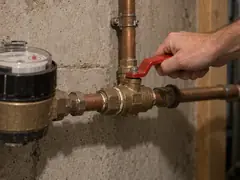
It’s usually where the water line enters the house. Then open a faucet on the lowest floor so the water left in the pipes drains out there instead of through the break.
-
2Safety
Keep clear of water near electrical
If anything electrical is wet, turn off the power at the main breaker, but only if you can reach it without stepping into water. Otherwise, call an electrician.
-
3
Photograph it, then move things
Take photos before you move anything, then get furniture and boxes off the wet floor; your insurer can deny a claim if you don’t protect your property. Don’t throw out damaged things until the adjuster has seen them.
-
4
Call your insurer, keep receipts
An adjuster doesn’t need to see the water before you act. Make only temporary repairs, and keep receipts for anything you buy.
Questions people ask
How much does a plumber charge to fix a burst pipe?
Usually $90–$650 at national prices. That’s one to two billed hours, a service call at the high end, and a coupling and a short piece of new pipe. Our range uses rates from 12 public plumbing bids and contracts: $88–$155 an hour on regular time and $120–$232 after hours. Replacing a long run of pipe, a slab leak or an outdoor line costs more.
Does homeowners insurance cover a burst pipe?
Usually, if it burst suddenly. Homeowners policies cover damage from a sudden and accidental discharge from a plumbing system, the NAIC says. Standard wording pays to tear out and replace the part of the house needed to reach the pipe, but not for the pipe itself. If your insurer decides you didn’t take steps to keep pipes from freezing, the damage may not be covered.
Can I dry it out myself?
A small spill on a hard floor, caught right away, often yes. The EPA says to dry wet areas within 24 to 48 hours to prevent mold. Water that got inside walls, under flooring or into carpet pad is harder: you can’t see whether it’s dry, and drying companies check it with moisture meters.
Why do pipes burst when they freeze?
Ice blocks the pipe, and as it keeps growing it builds up pressure in the water trapped behind the blockage until the pipe splits, University of Illinois research found. Pipes in outside walls, attics, crawl spaces and unheated garages freeze first.
How do I keep pipes from freezing?
Keep the heat at 55°F or higher, even when no one is home, IBHS says. On very cold nights, let cold water drip from faucets fed by exposed pipes, and open the cabinet doors under kitchen and bathroom sinks so warm air reaches the plumbing, the Red Cross says.
What if the house was empty when it froze?
Read your policy’s freezing condition. Standard wording covers freezing only if you used reasonable care to keep the heat on, or shut off the water and drained the pipes. Many policies also limit coverage once a home has been vacant for a set time, often 30 to 60 days.
How we got these numbers
Drying prices come from 10 published price sheets. Repair prices are built from published labor hours, federal wage data for each trade and store prices for materials, then checked against public repair price sheets. Both are adjusted for labor costs near your ZIP. Ranges are national until you add one. The plumber’s fix comes from 12 public plumbing bids and contracts and store prices for parts; the hours are our assumption. Read the full methodology.
- Published restoration price sheets (state and county contracts, contractor price lists), RestoreCost.
- Public plumbing bids and contracts (2022–2026), RestoreCost.
- Seabee Planner’s and Estimator’s Handbook (NAVFAC P-405), U.S. Navy.
- Occupational Employment and Wage Statistics, May 2025, U.S. Bureau of Labor Statistics.
- Will my homeowners insurance policy cover water damage from a burst pipe?, NAIC.
- Homeowners 3 – Special Form (HO 00 03 10 00), sample policy, ISO, hosted by the Insurance Information Institute.
- When are water damage and mold covered by insurance?, Texas Department of Insurance.
- Unexpected indoor waterfall? Home or renters insurance might help, Texas Department of Insurance.
- Surviving severe cold weather, Insurance Information Institute.
- When no one’s home: understanding the role of vacancy insurance, Insurance Information Institute.
- Preventing & Thawing Frozen Pipes, American Red Cross.
- Winter weather ready guide, IBHS.
- Pipe freezing study (Research Report 96-1), University of Illinois Building Research Council.
- What to Do to Protect Yourself From Electrical Hazards, CDC.
- A Brief Guide to Mold, Moisture and Your Home, U.S. EPA.